Githeri
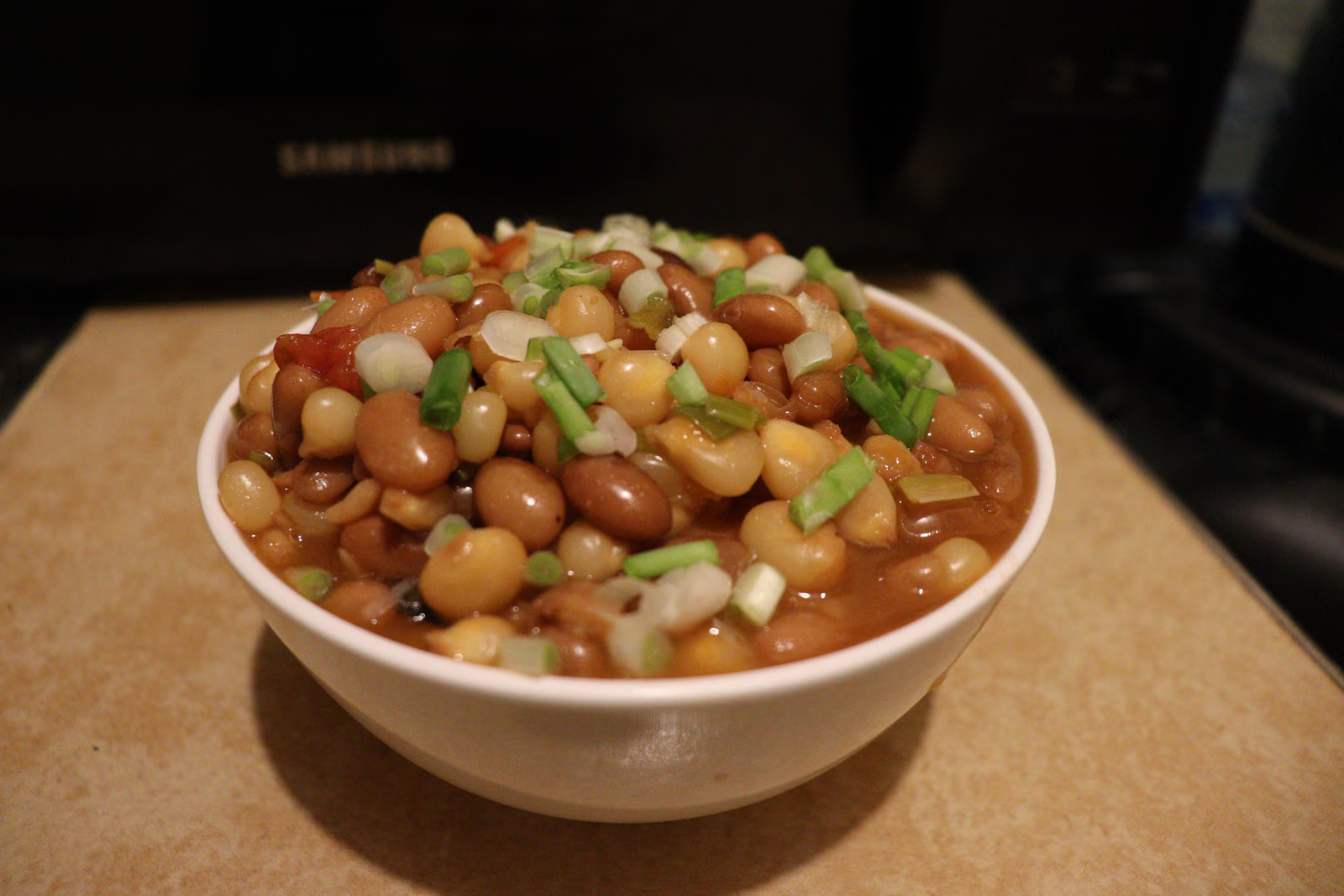
Githeri is a traditional Kikuyu dish of boiled beans and maize, eaten as an everyday staple across Kenya, in homes and schools alike.
Does your family know it this way?
The names it answers to
- GitheriGĩkũyũ
MEANING
Githeri signifies resourcefulness and simplicity: a filling, inexpensive meal built from two staples grown on the same land.
It is a symbol of everyday community and shared tables rather than any single occasion.
Meanings are plural by design: your family may hold another. Dispute or add below; disagreement is recorded, never erased.
When it appears
Ingredients, in sketch
Named components, not a recipe: no quantities, no method unless the making itself is part of the custom.
Etiquette
- Often shared straight from one communal pot.
Who eats it
Provenance
- generated: 2026-07-10
- source: LLM aggregation pipeline (llama-3.3-70b-versatile, 2026-07-10); unverified, awaiting community affirmation.
This entry is a hypothesis awaiting its people. If your family holds this dish differently, that difference is exactly what we want recorded.
Nearby in the library
Isitshwala
A firm, stiff maize porridge, cooked until it holds its shape, torn by hand and used to scoop relish: the daily anchor of the Southern African plate.
Shona · Ndebele · Zulu +5





Amasi
Naturally fermented, thickened milk, tangy and slightly effervescent, traditionally left to sour in a calabash: a daily food and, historically, a measure of a homestead’s cattle wealth.
Zulu · Xhosa · Swazi +1

Isonka samanzi
A dense steamed bread, cooked in a pot of simmering water rather than an oven, eaten warm with butter or alongside a stew.
Xhosa