Injera
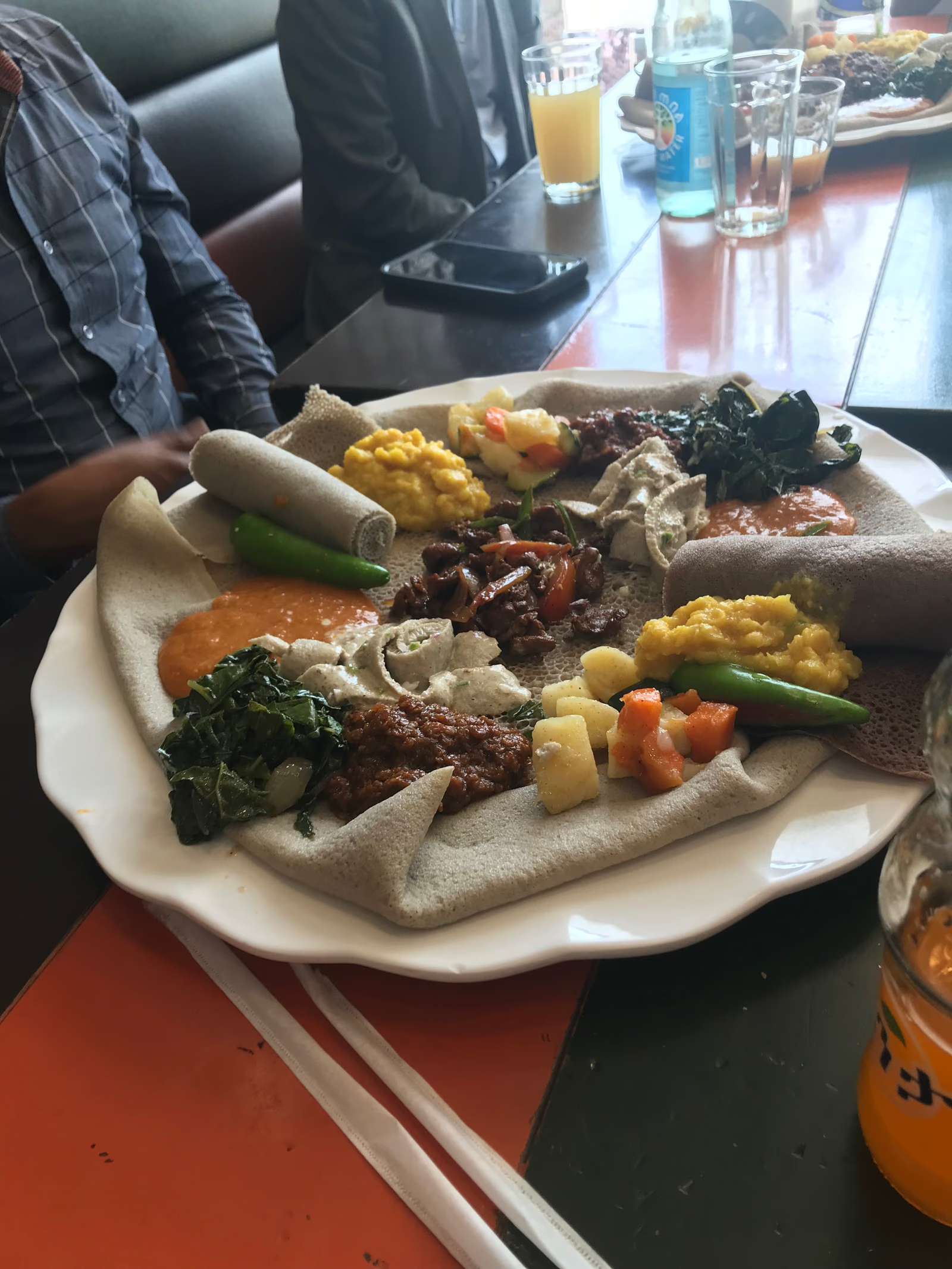
A large, spongy, faintly sour flatbread made from fermented teff, spread across the whole table as both plate and utensil for every meal.
Does your family know it this way?
The names it answers to
- InjeraAmharic
- TaitaTigrinya
MEANING
Injera is not a side, it is the table itself: stews are ladled directly onto it, and the meal is eaten by tearing pieces to scoop.
Sharing one large injera at the centre of the table, everyone reaching to the same surface, is the physical form of Ethiopian and Eritrean commensality.
Meanings are plural by design: your family may hold another. Dispute or add below; disagreement is recorded, never erased.
When it appears
Ingredients, in sketch
Named components, not a recipe: no quantities, no method unless the making itself is part of the custom.
How it is made
- 1
The ferment
Teff flour and water are mixed and left to ferment for several days, developing the bread’s sourness.
- 2
The bake
The batter is poured in a spiral onto a large hot clay or metal griddle (mitad) and covered until it cooks through, bubbled and spongy.
Etiquette
- Eaten with the right hand only.
- Diners often feed a piece of food directly into a companion’s mouth (gursha) as a gesture of affection or respect.
Who eats it


- Variant: Sorghum or maize blends are used where teff is scarce or expensive.
Provenance
- generated: 2026-07-10
- source: Model-knowledge aggregation pass (2026-07-10); unverified, awaiting community affirmation.
This entry is a hypothesis awaiting its people. If your family holds this dish differently, that difference is exactly what we want recorded.
Nearby in the library
Doro wat
A deep-red, slow-cooked chicken stew built on a mountain of caramelised onion and berbere spice, finished with a whole hard-boiled egg per portion: the centrepiece of Ethiopian festive tables.
Amhara · Ethiopian & Eritrean Orthodox
Isitshwala
A firm, stiff maize porridge, cooked until it holds its shape, torn by hand and used to scoop relish: the daily anchor of the Southern African plate.
Shona · Ndebele · Zulu +5





Amasi
Naturally fermented, thickened milk, tangy and slightly effervescent, traditionally left to sour in a calabash: a daily food and, historically, a measure of a homestead’s cattle wealth.
Zulu · Xhosa · Swazi +1