Matoke
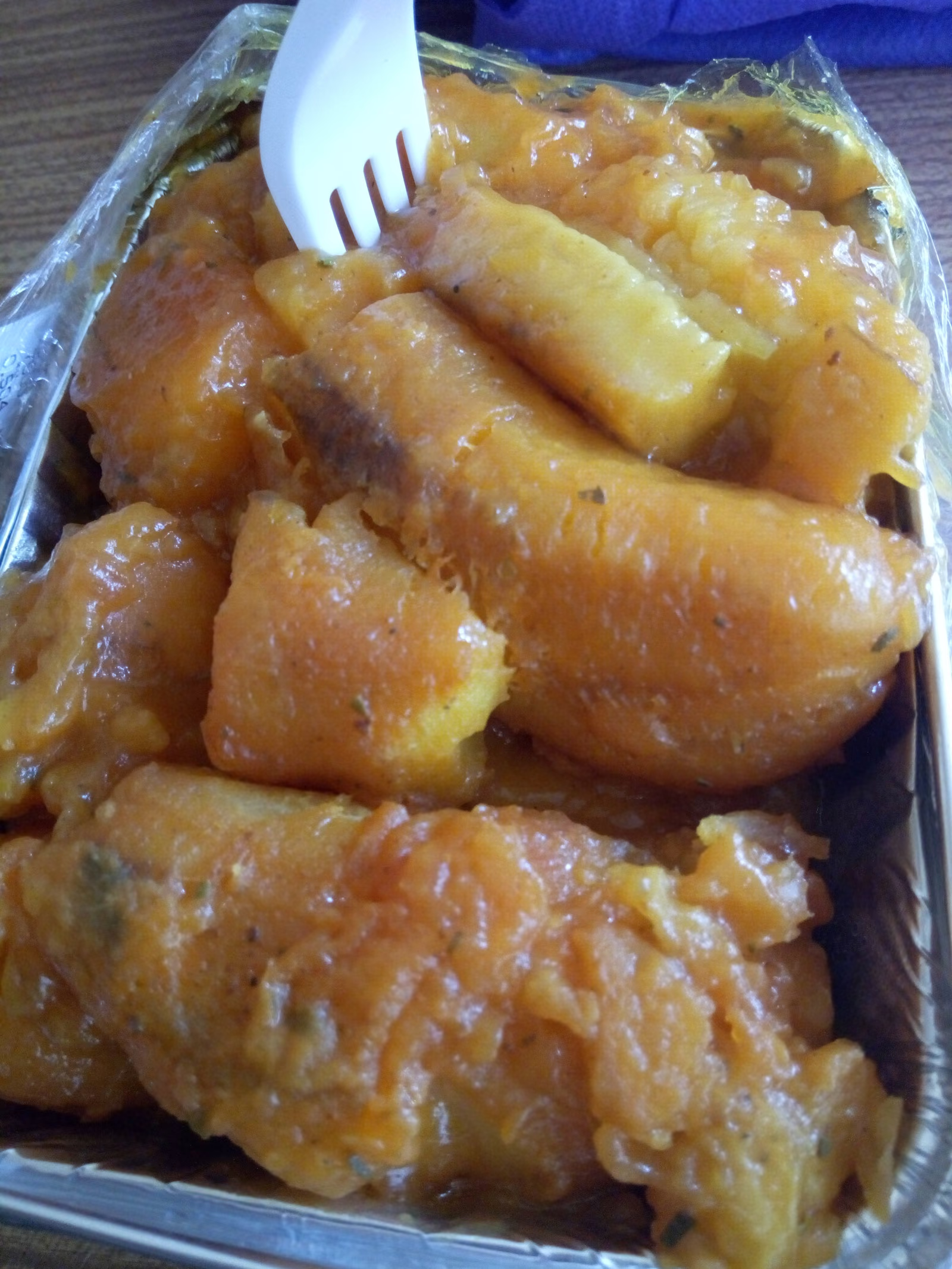
Starchy green (unripe) bananas, steamed in their own leaves until soft, then mashed into a smooth, mild-tasting staple that anchors most Baganda meals.
Does your family know it this way?
The names it answers to
- MatokeLuganda
MEANING
So central to daily eating that "matoke" can be used to mean "food" itself in everyday speech.
Steaming it wrapped in banana leaves rather than boiling it directly is a technique passed down specifically to preserve its flavour.
Meanings are plural by design: your family may hold another. Dispute or add below; disagreement is recorded, never erased.
When it appears
Ingredients, in sketch
Named components, not a recipe: no quantities, no method unless the making itself is part of the custom.
How it is made
- 1
The wrap
Peeled green bananas are wrapped tightly in banana leaves.
- 2
The steam
The bundle steams over water for hours until completely soft.
- 3
The mash
The bananas are mashed inside their leaf wrapping into a smooth, pale-yellow mound.
Who eats it

Provenance
- generated: 2026-07-10
- source: Model-knowledge aggregation pass (2026-07-10); unverified, awaiting community affirmation.
This entry is a hypothesis awaiting its people. If your family holds this dish differently, that difference is exactly what we want recorded.
Nearby in the library
Isitshwala
A firm, stiff maize porridge, cooked until it holds its shape, torn by hand and used to scoop relish: the daily anchor of the Southern African plate.
Shona · Ndebele · Zulu +5





Amasi
Naturally fermented, thickened milk, tangy and slightly effervescent, traditionally left to sour in a calabash: a daily food and, historically, a measure of a homestead’s cattle wealth.
Zulu · Xhosa · Swazi +1

Isonka samanzi
A dense steamed bread, cooked in a pot of simmering water rather than an oven, eaten warm with butter or alongside a stew.
Xhosa