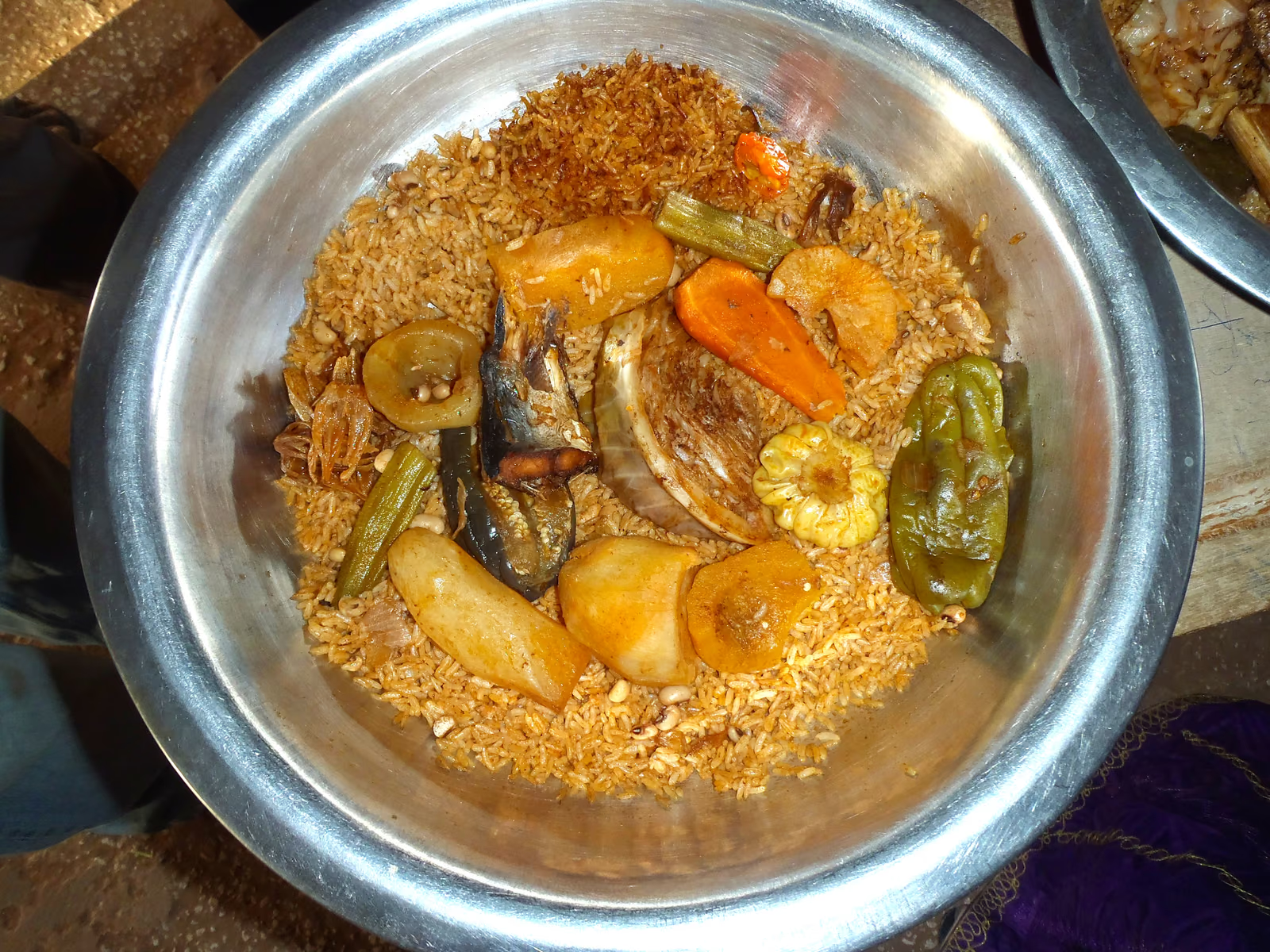
Thieboudienne
Senegal’s national dish: fish and vegetables stewed in tomato and tamarind, the flavourful broth then used to cook the rice, so nothing of the pot is wasted.
Does your family know it this way?
The names it answers to
- ThiéboudienneWolof/French transliteration
- Ceebu jënWolof · literally "rice, fish"
MEANING
Widely considered the dish that best represents Senegalese identity, often served at the centre of a large shared platter for a family meal.
Cooking the rice in the fish-and-vegetable broth, rather than separately, is the technique that defines it and concentrates its flavour.
Meanings are plural by design: your family may hold another. Dispute or add below; disagreement is recorded, never erased.
When it appears
Ingredients, in sketch
Named components, not a recipe: no quantities, no method unless the making itself is part of the custom.
Etiquette
- Traditionally served on one large communal platter, eaten together from a shared centre.
Who eats it
Provenance
- generated: 2026-07-10
- source: Model-knowledge aggregation pass (2026-07-10); unverified, awaiting community affirmation.
This entry is a hypothesis awaiting its people. If your family holds this dish differently, that difference is exactly what we want recorded.
Nearby in the library
Jollof rice
Rice slow-cooked in a rich tomato-and-pepper base until every grain turns deep red-orange: West Africa’s great shared party dish, claimed proudly (and loudly) by several nations at once.
Yoruba · Akan · Wolof +2



Umngqusho
Samp (crushed maize) slow-cooked with sugar beans, often with onion and chilli, into a hearty, deeply savoury dish: famously the food Nelson Mandela requested for his own birthday.
Xhosa

Potjiekos
A layered meat-and-vegetable stew cooked slowly over an open fire in a three-legged cast-iron pot, never stirred, so each layer keeps its own character.
Afrikaners · South Africans