Tuwo shinkafa
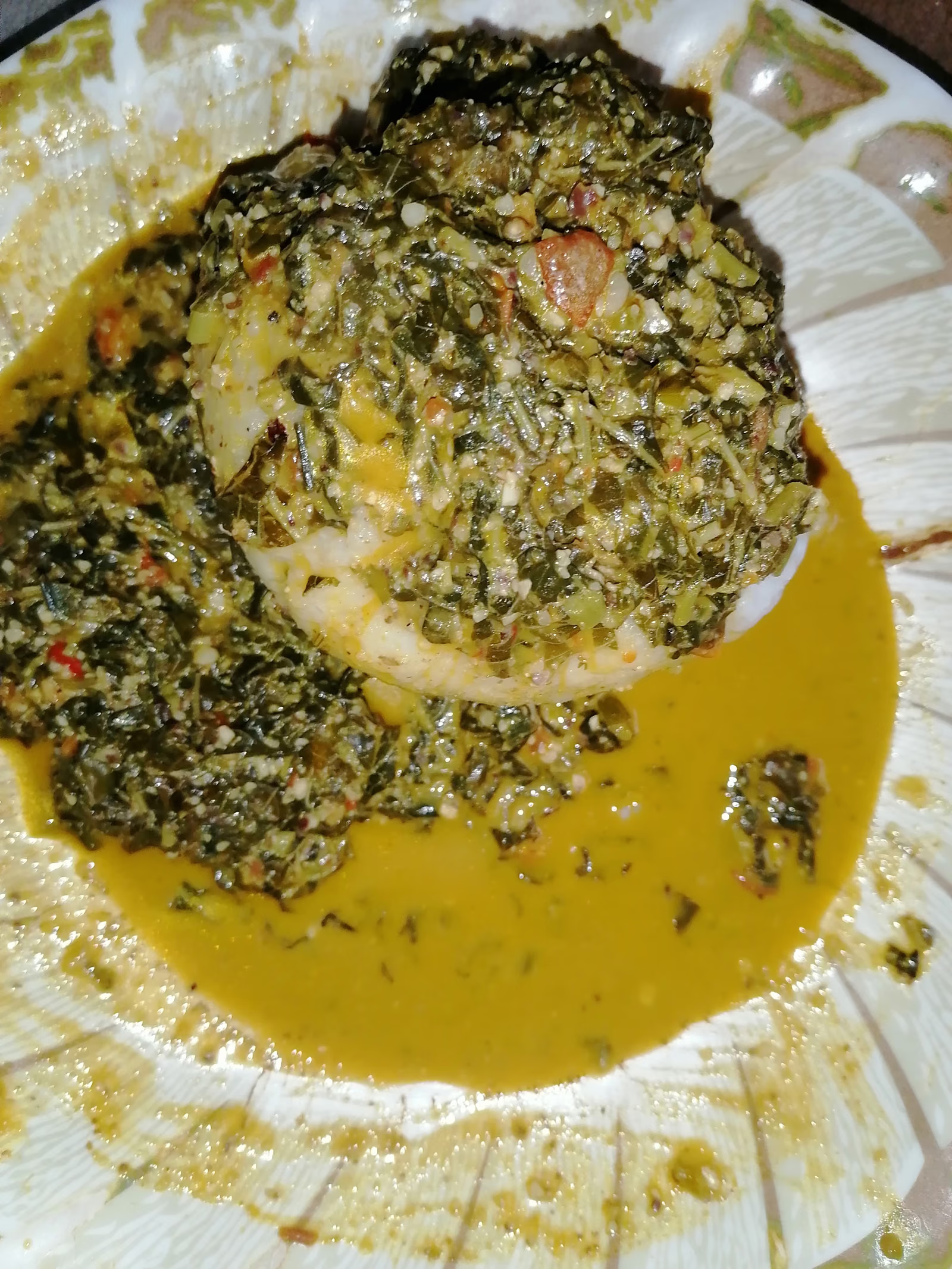
Rice cooked down and mashed into a smooth, soft mound, served with a thick vegetable or meat soup: the Hausa answer to the swallow starches eaten further south.
Does your family know it this way?
The names it answers to
- Tuwo shinkafaHausa · literally "rice tuwo"
MEANING
A staple built around the grains grown across the northern savanna, standing alongside tuwo masara (maize) as the daily anchor of a Hausa meal.
Meanings are plural by design: your family may hold another. Dispute or add below; disagreement is recorded, never erased.
When it appears
Ingredients, in sketch
Named components, not a recipe: no quantities, no method unless the making itself is part of the custom.
Etiquette
- Eaten with the hand, torn into pieces and dipped into soup.
Who eats it



- Variant: Tuwo masara, made from maize instead of rice, is equally common.
Provenance
- generated: 2026-07-10
- source: Model-knowledge aggregation pass (2026-07-10); unverified, awaiting community affirmation.
This entry is a hypothesis awaiting its people. If your family holds this dish differently, that difference is exactly what we want recorded.
Nearby in the library
Isitshwala
A firm, stiff maize porridge, cooked until it holds its shape, torn by hand and used to scoop relish: the daily anchor of the Southern African plate.
Shona · Ndebele · Zulu +5





Amasi
Naturally fermented, thickened milk, tangy and slightly effervescent, traditionally left to sour in a calabash: a daily food and, historically, a measure of a homestead’s cattle wealth.
Zulu · Xhosa · Swazi +1

Isonka samanzi
A dense steamed bread, cooked in a pot of simmering water rather than an oven, eaten warm with butter or alongside a stew.
Xhosa