Kitenge
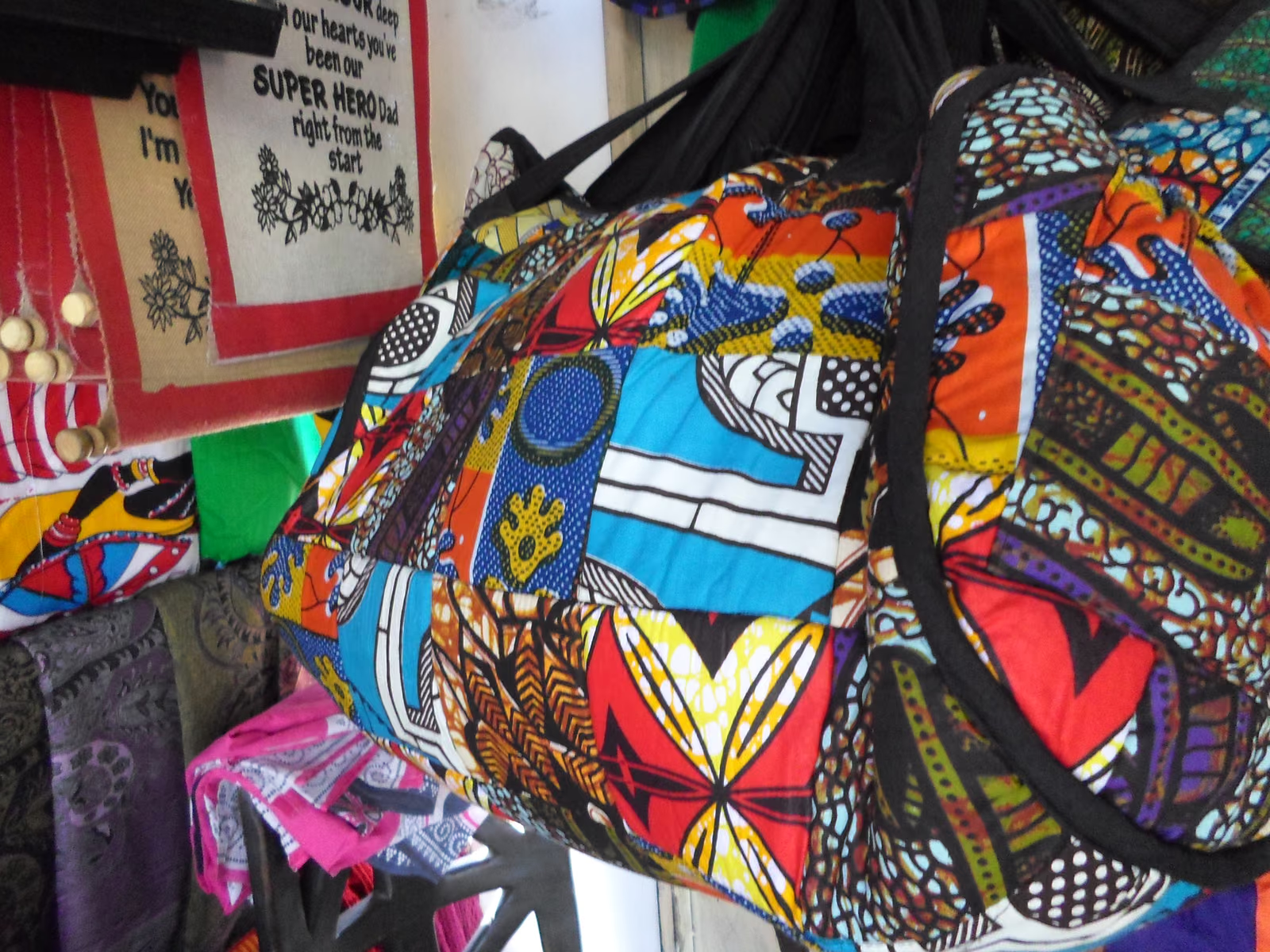
A vibrant, wax-printed cotton fabric worn across much of East Africa, thicker and less script-bound than kanga, tailored into dresses, suits, and formal wear as often as wrapped.
Does your family know it this way?
The names it answers to
- KitengeKiswahili
MEANING
Widely used for celebration dress, kitenge has become a marker of East African identity broadly, worn with pride at weddings, graduations, and national events.
Its bold, often large-scale prints are part of a wider West and East African wax-print textile tradition, shared and adapted across borders.
Meanings are plural by design: your family may hold another. Dispute or add below; disagreement is recorded, never erased.
Colour, pattern & material
When it is worn
Who wears it, and may I?
Worn broadly across East African communities, by anyone; no restriction beyond general good taste in occasion-matching.
Who wears this
Provenance
- generated: 2026-07-10
- source: Model-knowledge aggregation pass (2026-07-10); unverified, awaiting community affirmation.
This entry is a hypothesis awaiting its people. If your family holds or wears this differently, that difference is exactly what we want recorded.
Nearby in the library
Kanga
A rectangular printed cotton cloth from the Swahili Coast, bordered and bold-patterned, always printed with a short Swahili proverb along one edge: cloth that also speaks.
Swahili Coast
Shweshwe
A crisp, indigo-dyed printed cotton fabric with dense geometric patterns, historically stamped with a distinctive vinegar-like scent from its dye process: a foundational South African textile.
Xhosa · Basotho · South Africans

Basotho blanket
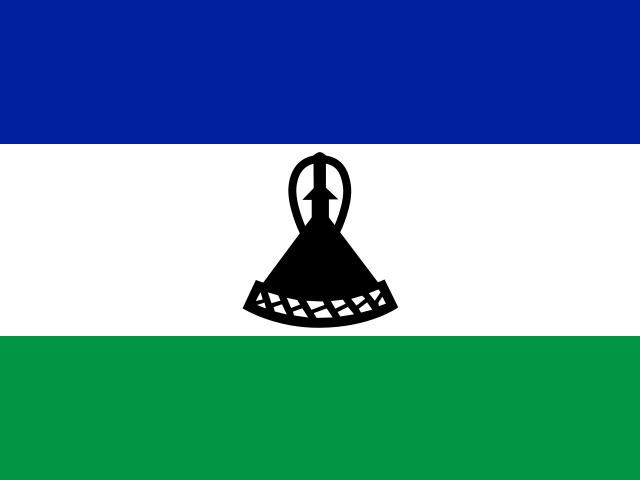
A thick, boldly patterned wool blanket, worn draped over the shoulders and pinned, so central to Basotho identity that it appears on Lesotho’s own iconography.
Basotho