Borborbor · the Ewe social dance of celebration and togetherness
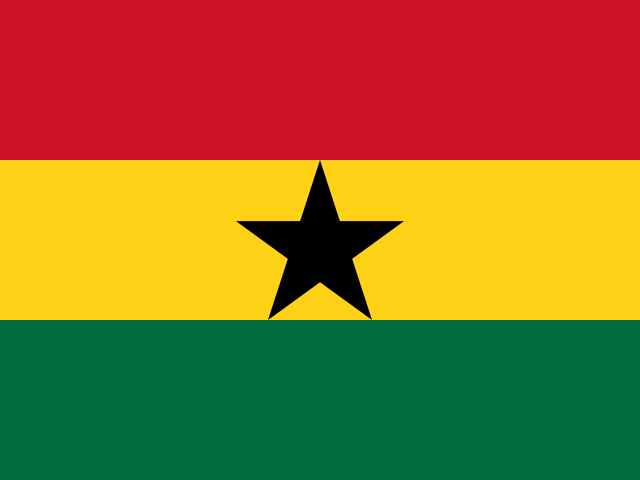
Borborbor is a social dance of the Ewe people, mainly from the central and northern parts of the Volta Region of Ghana, believed to be more than 800 years old. It is danced at weddings, funerals, festivals and other merry-making and national events.
Does your family know it this way?
The names it answers to
| Borborbor | Ewe |
|---|---|
| Akpese | Ewe · An earlier name for the dance, performed by the people of Kpando |
What happens
Dressing alike
Today Borborbor dancers are seen in smart uniforms with matching handkerchiefs.
Waist twisting
A common feature across groups is vigorous and swift waist twisting by the women.
Kneeling, squatting and rising
Dancers may go down on their knees and squat, then get up to wriggle their buttocks while turning round with great fervour, holding the onlookers captive.
WHY
It began as entertainment after a hard day's work on the farm and other tedious labour, played from late afternoon into the evening before bed.
It is described as purely cultural entertainment.
It is a strong unifying tool among the people and their neighbouring communities.
It is a social dance that encourages individual expression.
It represents Ghanaian culture and serves as a sign of identity.
WHYs are plural by design: your family may hold another. Dispute or add below; disagreement is recorded, never erased.
Who practices it
- Variant: Different Borborbor groups have their own dance styles.
- Variant: When the Ewe fled the Notsie Kingdom, they carried the dance to the places where they settled, especially the middle belt of Eweland. It is very common in Kpando, Kpeve, Ho, Adaklu, Hohoe and Peki.
- Variant: Over time it has changed to suit all occasions. It is now played at weddings, festivals, funerals, graduation ceremonies at tertiary institutions, and national events such as the Independence Day celebration at Ho Jubilee Park and the National Festival of Arts and Culture (NAFAC).
If you are new here
Onlookers are part of the occasion: the dancers perform with great fervour to hold the attention of those watching.
Provenance
Where this comes from
- Borborbor: Legendary Ewe dance preserved over centuries · graphic.com.gh · 13 statementsFound by a web search on graphic.com.gh and read in full. A website is not edited or checked like a reference work: read it with care.
- motcca.gov.gh · motcca.gov.gh · 6 statementsFound by a web search on motcca.gov.gh and read in full. A website is not edited or checked like a reference work: read it with care.
Written by our research agents from these sources, in our own words, and checked against them by a second model. A source is not proof. If it is wrong, or your family holds it differently, put us right below.
- generated: 2026-11-28
- source: https://www.graphic.com.gh/lifestyle/life/ghana-news-borborbor-legendary-ewe-dance-preserved-over-centuries.html
- source: https://www.motcca.gov.gh/dance/
This entry is a hypothesis awaiting its people. If your family does it differently, that difference is exactly what we want recorded.
Nearby in the library
Outdooring · the Akan and Ga eighth-day naming
On the eighth day the newborn is brought outdoors for the first time, shown to the sky and community, and given names including the day name that every Akan and Ga person carries.
Akan · Ga · Ewe
The braai · fire, meat, and everyone
Southern Africa’s great equalizer: a wood fire, meat, and unhurried company. Every community braais, and 24 September is celebrated by many as National Braai Day alongside Heritage Day.
South Africans · Zimbabweans · Afrikaners +5



Buna · the Ethiopian coffee ceremony
The Ethiopian and Eritrean ritual of hospitality: green beans roasted over coals before the guests, ground, and brewed in the jebena; three rounds are served, and to leave before the third is to walk out on the blessing.
Amhara · Tigrinya · Oromo +1