Imbalu · Birth Celebration
Imbalu is a celebration to mark the birth of a child, involving music, dance, and feasting. It is an opportunity for the community to welcome the new child and to bless the family.
Does your family know it this way?
The names it answers to
- ImbaluLuganda
What happens
- 1
Naming
The child is named, and the name is announced to the community.
- 2
Feasting
The community comes together to feast and celebrate the birth of the child.
- 3
Blessing
The child is blessed by the elders, who pray for the child's health, happiness, and success.
WHY
The Imbalu celebration is done to welcome the new child and to bless the family.
It is also an opportunity for the community to come together and to celebrate the arrival of a new life.
WHYs are plural by design: your family may hold another. Dispute or add below; disagreement is recorded, never erased.
Who practices it
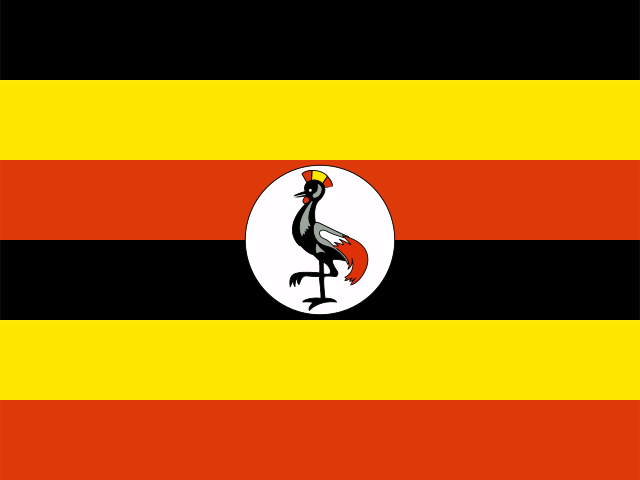
Provenance
- generated: 2026-07-05
- source: LLM aggregation pipeline (llama-3.3-70b-versatile via Groq, 2026-07-05); unverified, awaiting community affirmation.
This entry is a hypothesis awaiting its people. If your family does it differently, that difference is exactly what we want recorded.
Nearby in the library
Imbeleko · introducing the child to the ancestors
The Nguni rite in which a goat is slaughtered at the family homestead to introduce a newborn (or a person never introduced) to the ancestors and formally place them in the clan.
Xhosa · Zulu · Ndebele +2
Ìkómọjáde · the Yoruba naming day
On the seventh (girls), ninth (boys), or eighth day by family practice, the Yoruba child is carried out and named before family, with symbolic foods placed on the tongue and the oríkì declared.
Yoruba

Ịgụ aha · the Igbo naming ceremony
The Igbo child is named before kin, often on the 7th or 28th day market cycle, with kola nut broken, the circumstances of birth honoured in the name, and the paternal line affirmed.
Igbo